The Word Group
Parent organisation
by The Word Group
A Global Movement for Words, Knowledge & Human Connection
The Word Collective is the global vision of Shiloh-Elinor Kabede Shoham—educator, cultural diplomat, literary advocate, and founder of The Word Group—and is proudly executed by Shiloh Group of Schools, a global educational network committed to excellence in languages, literature, arts, culture, research, innovation, and international learning.
Inspired by the belief that words preserve cultures, shape societies, and transform lives, The Word Collective was established as an international movement dedicated to preserving, celebrating, and advancing words, languages, literature, research, creativity, and human communication.
Together, The Word Group and Shiloh Group of Schools are creating a worldwide ecosystem where learners, educators, writers, artists, researchers, and communities can read, write, research, publish, create, and share knowledge across generations and cultures. Through schools, academies, colleges, educational travel programmes, community initiatives, and specialised centres, we are building a future where education, culture, and communication remain at the heart of human progress.
READ. WRITE. THINK. COMMUNICATE. CREATE. CONNECT.
Who we serve
Whether you are beginning your literacy journey or are an established professional, The Word Collective provides opportunities to learn, collaborate, and contribute to a global culture of knowledge.
Words matter in the age of AI
Artificial Intelligence is transforming the world, but we believe that the uniquely human ability to think, imagine, read, write, communicate, and create has never been more valuable. Our mission is not to compete with technology, but to ensure that technology strengthens—not replaces—the human voice.
By preserving these essential human skills, we empower people to use technology responsibly while remaining thoughtful, creative, ethical, and deeply connected through words.
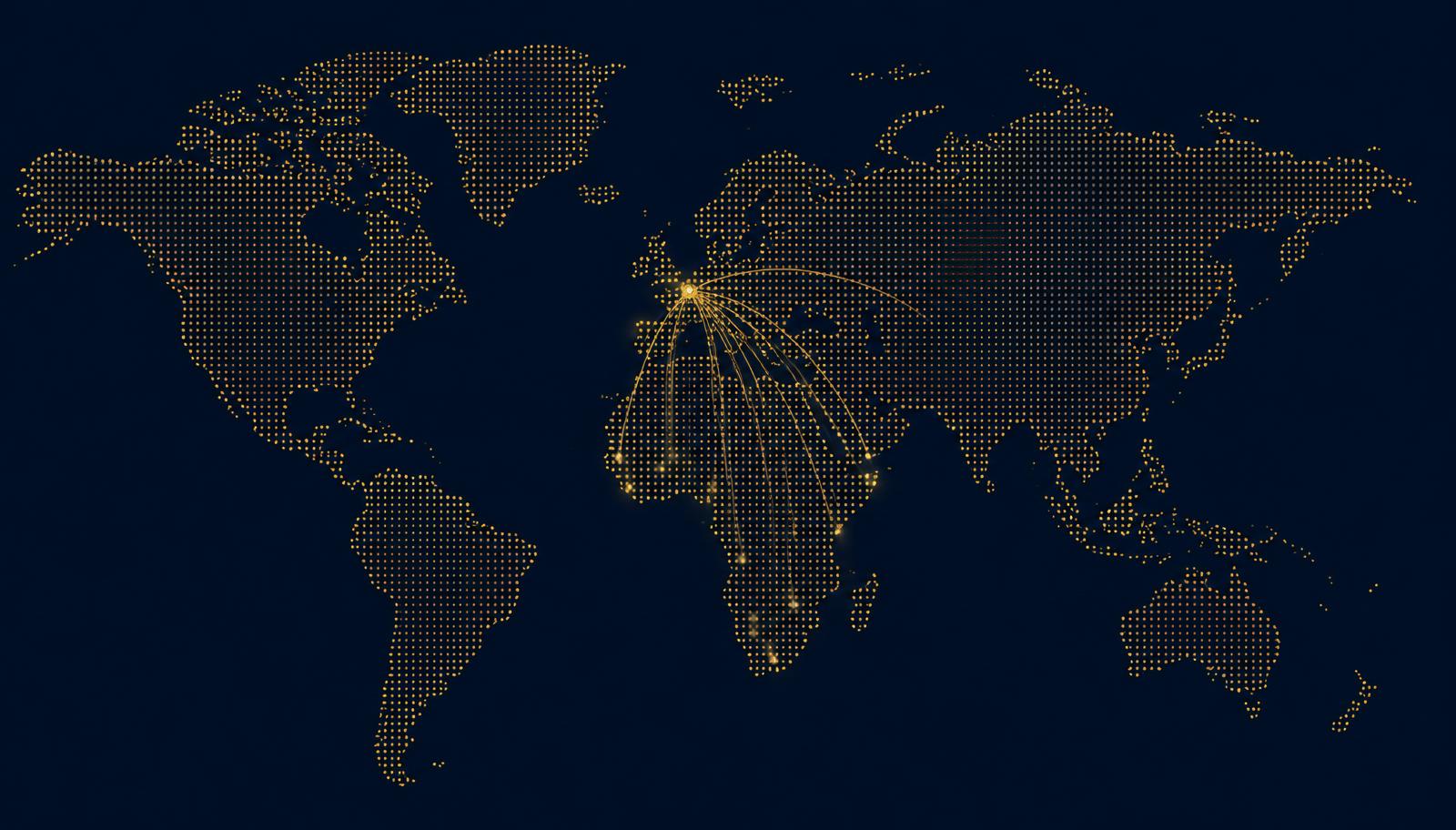
Our global programmes
Through both online and in-person programmes, we create lifelong opportunities for learning, creativity, collaboration, leadership, and meaningful global citizenship.
The Word Group ecosystem
Parent organisation
Global movement and international community
Libraries, reading rooms, and community literacy spaces
Centres for language, literature, journalism, writing, and research
Innovation, publishing, creative writing, and AI literacy laboratories
Community learning and research centres
Publishing books, journals, magazines, and digital media
Scholarships, mentorship, leadership programmes, and creative residencies
Together, these initiatives preserve knowledge, celebrate cultural diversity, encourage multilingualism, and inspire future generations of readers, writers, researchers, educators, artists, journalists, and cultural leaders.
Our founder & our institution
At the heart of this movement is Shiloh-Elinor Kabede Shoham, whose vision is to build an international culture where words continue to educate, unite, and inspire. That vision is realised through Shiloh Group of Schools, which serves as the educational foundation for The Word Collective by delivering innovative programmes in languages, literature, arts, culture, research, educational travel, and lifelong learning.
Words as tools for peace and progress
Together, they are building an international community where education, language, literature, arts, culture, and human connection become powerful tools for peace, understanding, innovation, and sustainable development.
An Exclusive Profile
A Global Movement for Words, Knowledge & Human Connection
There are people who build institutions, and there are people who build movements. Shiloh-Elinor Kabede Shoham has spent nearly two decades doing both at once, and The Word Collective is perhaps the clearest expression yet of what happens when the two impulses meet in a single mind.
To understand The Word Collective, it helps to understand something of the woman behind it. Shiloh-Elinor is not, by training or temperament, a single-discipline thinker. Her academic foundations span psychology, neuroscience and neurophysiology, theology, and human rights law—an unusual combination, until one sees how naturally it converges in her work. She has spent her career asking a version of the same question across very different fields: what does it take for a human being, or a community, or a culture, to be fully understood, fully expressed, and fully free? Education answered part of that question. Cultural diplomacy answered another part. The Word Collective is her answer to what remains—the conviction that language itself, in all its forms, is where understanding either happens or fails.
She founded The Word Group, and through it, The Word Collective, not as a literacy programme in the conventional sense, but as something closer to an act of preservation. Her premise is direct: words carry more than information. They carry memory, identity, and the possibility of being known by another person. A community that loses its relationship with reading, writing, and storytelling does not simply lose a skill—it loses a way of holding onto itself. In an era defined by artificial intelligence and the quiet erosion of attention, Shiloh-Elinor has positioned The Word Collective as a deliberate counterweight, insisting that the instinct to write by hand, to read slowly, to speak in public, and to tell a true story remain not nostalgic habits but essential human capacities worth actively teaching.
What distinguishes her approach is that she refuses to treat this as a rearguard action against technology. She has been explicit that The Word Collective's mission is not to compete with artificial intelligence but to ensure that technology strengthens, rather than replaces, the human voice. This is a subtler and more difficult position than simple resistance, and it reflects the same interdisciplinary instinct that runs through the rest of her work—an unwillingness to accept false choices between tradition and progress, between the human and the technological, when a more integrated path is possible.
The Word Collective, as she has built it, is proudly executed by Shiloh Group of Schools, the global educational network she also leads, giving the movement an institutional backbone rather than leaving it as an aspiration. Through Word Houses, Word Institutes, Word Labs, Knowledge Hubs, and Word Press, the Collective is assembling a worldwide ecosystem in which readers, writers, journalists, researchers, translators, songwriters, and storytellers—professional and aspiring alike—find both community and infrastructure. It is a movement designed to hold space for the person publishing their first poem and the researcher completing a decade-long study with equal seriousness.
There is a particular quality to how Shiloh-Elinor speaks about this work: she conveys authority not through the recitation of titles but through the coherence of her ideas, a trait consistent across every institution she has built. She does not need to list credentials to be taken seriously; the scope and precision of her thinking does that on its own. This is perhaps why The Word Collective, despite its considerable ambition, reads less like a corporate initiative and more like a personal conviction that has grown large enough to need many hands.
Her vision for the Collective extends across continents by design—East Africa, Europe, the Nordics, the Indian Ocean Islands—mirroring the geography of her own life and work. It is not an abstraction to her. It is built from the same instinct that has guided her institution-building elsewhere: identify what a community is at risk of losing, and build the structure that lets them keep it.
Asked to summarize what she is building, Shiloh-Elinor's answer is characteristically unadorned: a world where every community has access to knowledge, every learner has the opportunity to read, write, communicate, research, and create, and every culture is preserved and shared through the enduring power of words. It is a large claim, made without embellishment—which, for those who know her body of work, is exactly the point.
Read. Write. Think. Communicate. Create. Connect.
To build a world where every community has access to knowledge, every learner has the opportunity to read, write, communicate, research, and create, and every culture is preserved, celebrated, and shared through the enduring power of words.
Partnerships, Word Houses, fellowships, and community programmes for institutions and literary communities worldwide.
Start a conversation